Category: SEO

  • Is Your Website Truly Accessible? Why Digital Access Should Be Part of Your SEO Strategy

    Is Your Website Truly Accessible? Why Digital Access Should Be Part of Your SEO Strategy

    This week is Global Accessibility Awareness Day (GAAD), and it’s the perfect time to ask: Is your website truly accessible to everyone who might visit it?

    At Social+, we believe that great marketing starts with inclusion. That’s why digital access is more than a nice-to-have. It’s a core part of how we design websites, write content, and run campaigns. Whether you’re a small business, a community brand, or a growing organisation, making your digital presence more accessible benefits everyone – including your SEO.

    Let’s break down why digital access matters, how it affects your Google rankings, and what steps you can take to improve accessibility on your site.

    What Is Digital Access?

    Digital access means ensuring your online content, services, and platforms can be used by as many people as possible. This includes people with visual, auditory, cognitive, or mobility impairments.

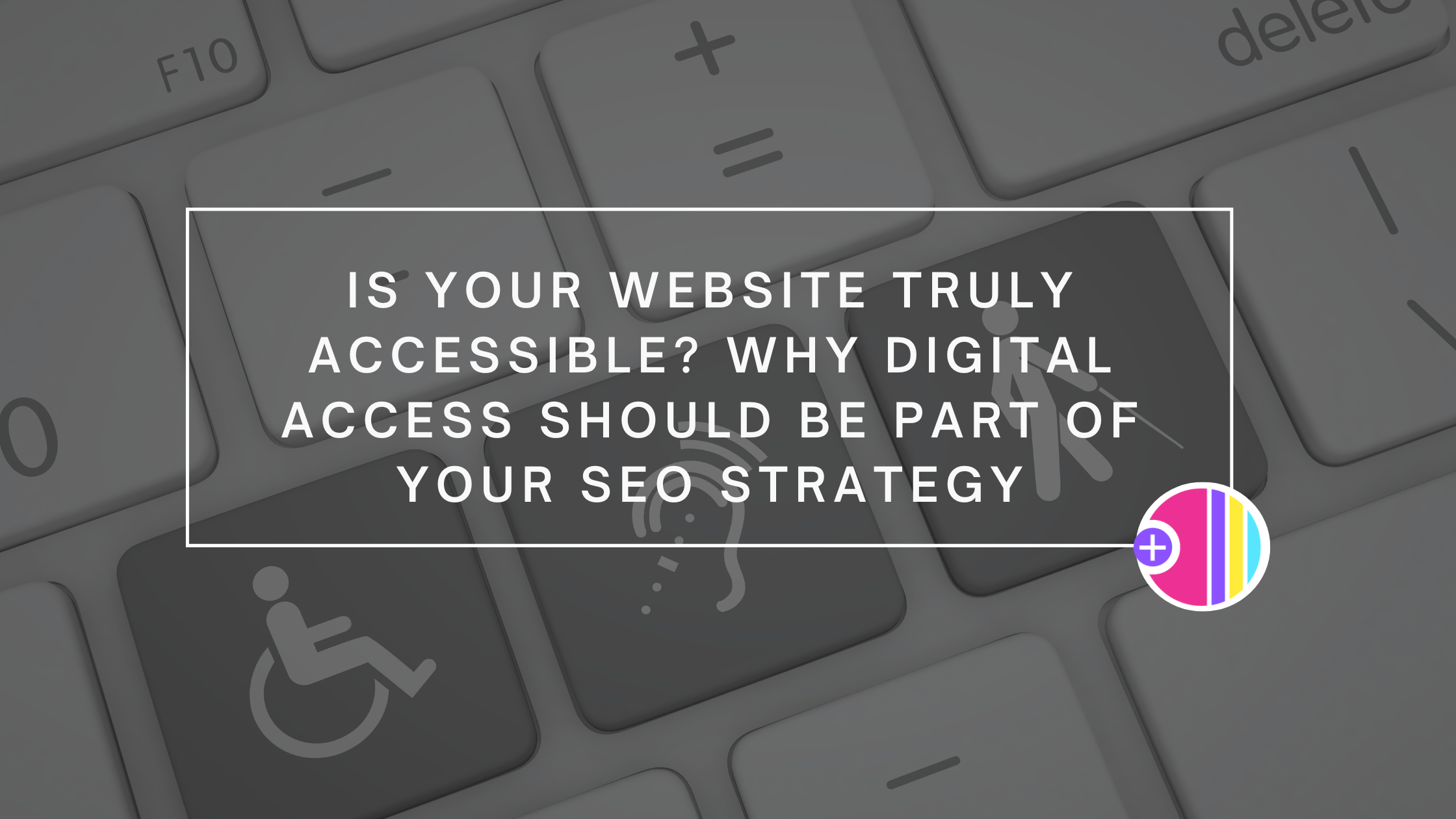
    This might involve using proper colour contrast and readable fonts, enabling keyboard-only navigation, or adding alternative text to your images. It’s all about removing barriers so everyone can engage with your brand online.

    And when you do it well, the benefits reach far beyond accessibility. It improves user experience, strengthens brand trust, and supports search visibility too.

    Why Google Cares About Accessibility

    Google is focused on delivering the best possible experience for its users. That means prioritising websites that are fast, easy to navigate, mobile-friendly, and increasingly, accessible.

    When your website includes accessibility features like image descriptions, structured headings, and keyboard-friendly design, Google can better understand and rank your content. Many of the same practices that support digital access also support SEO.

    Here are a few examples:

    • Alt text helps search engines understand your images and can boost visibility in image search results.
    • Clear heading structures help Google crawl and interpret your content more effectively.
    • Responsive and mobile-friendly layouts reduce bounce rates and keep users on your site longer.
    • Descriptive link text gives users and crawlers better context, improving usability and structure.
    • Transcripts and captions for videos help Google index rich media content and support all users.

    If you’re investing in SEO but ignoring accessibility, you’re missing a key part of what makes websites rank well.

    Practical Ways to Improve Digital Access

    You don’t need a full website rebuild to make accessibility improvements. Here are some impactful steps you can take to improve digital access right now:

    1. Add Text-to-Speech Tools

    These allow users to listen to your content instead of reading it. This supports people with dyslexia, vision impairments, or cognitive challenges. There are several browser-friendly tools available that are quick to implement.

    2. Offer an Easy Read Version

    Create simplified versions of your key pages using plain language and clear sentence structure. Easy Read formats often use short paragraphs, bullet points, and images to explain information clearly and support people with learning disabilities.

    3. Write Alt Text for All Images

    Every image on your site should have a short but descriptive text alternative. This helps screen reader users understand your content and improves how Google indexes your media.

    4. Make Sure Your Site Can Be Used Without a Mouse

    Some users rely on keyboard-only navigation. Test your site to ensure every part of it -from menus to forms – can be accessed using just the tab, enter, and arrow keys.

    5. Include Captions and Transcripts for Videos

    Video is one of the most engaging forms of content online. But without captions, users who are deaf or hard of hearing may be excluded. Captions also improve comprehension for people watching in sound-off environments.

    6. Use High Contrast and Clear Fonts

    Avoid grey-on-white text or fonts that are overly decorative. Clear text, proper spacing, and strong contrast ratios make reading easier for all users and reduce fatigue.

    How Social+ Supports Accessible Digital Marketing

    At Social+, we see accessibility as part of good design. Whether we’re building a new website, designing a campaign, or writing content, we think about how that experience will work for everyone – not just the majority.

    We believe that digital access isn’t a one-off task. It’s a mindset. When businesses include accessibility in their marketing, they’re creating a better experience for their audience and improving how they show up online.

    Ready to Improve Your Digital Access?

    If accessibility hasn’t been on your radar before, now is the time to start. Digital access helps users, supports SEO, and reflects your brand values. It doesn’t need to be complicated – and it’s one of the most important things you can do to make your content work harder.

    Whether you want an accessibility review, website support, or help with content that reaches more people, we’re here to help. Social+ is proud to support businesses that care about doing digital better.
  • Landing Page Optimisation: Boost Rankings, Engage Visitors, Convert More

    Landing Page Optimisation: Boost Rankings, Engage Visitors, Convert More

    Every successful digital strategy relies on the performance of its website. While overall site health is important, individual landing pages often determine whether your visitors stay, engage or convert. That’s why landing page optimisation is not only important for user experience but also essential for search engine optimisation.

    At Social+, our SEO services are built around helping businesses like yours improve visibility, performance and conversion rates. From keyword targeting to technical fixes, we focus on the details that make your website work harder for you. In this blog, we explore how landing page optimisation directly supports your SEO goals and why it should be a top priority in your digital strategy.

    What Is Landing Page Optimisation?

    Landing page optimisation is the process of improving individual web pages to increase traffic, engagement, and conversions. This involves refining everything from layout and load speed to headings, content and calls to action. An optimised landing page serves a clear purpose, meets user expectations and guides them toward a specific outcome.

    When done well, it helps search engines understand the content of the page and improves rankings for targeted search terms. For users, it creates a seamless and informative experience that encourages them to take action. A single landing page can be the difference between a missed opportunity and a new customer.

    How It Supports Your SEO Strategy

    Landing page optimisation is a vital part of search engine optimisation. Search engines like Google consider factors such as page speed, keyword relevance, and mobile usability when ranking websites. Each of these elements plays a role in how well your landing pages perform.

    Here are just a few of the ways it supports your wider SEO efforts:

    1. Improved Keyword Relevance

    Each landing page should target specific keywords that reflect the intent of your audience. By placing these keywords naturally in headings, subheadings and content, you signal to search engines that your page is relevant to user queries. This increases your chances of ranking higher in search results and attracting quality traffic.

    2. Faster Load Times

    Pages that load quickly tend to rank better. Speed also impacts user behaviour. If a page takes too long to load, visitors are more likely to leave without taking action. Our technical SEO team ensures that all pages, including landing pages, are optimised for speed through clean coding, compressed images and streamlined functionality.

    3. Mobile Responsiveness

    With the majority of searches now happening on mobile devices, landing page optimisation must include mobile-first design. Pages should adjust to different screen sizes without losing functionality or appeal. Google uses mobile usability as a ranking factor, so this is critical for SEO performance.

    What We Include in Our SEO Services

    At Social+, we deliver comprehensive SEO services that put landing page performance at the centre of your online success. Every project starts with a full website and SEO audit, helping us identify opportunities for improvement across all areas, including:

    • Keyword research and analysis
    • On-page optimisation for titles, meta tags and content
    • Technical SEO such as speed, security and responsiveness
    • Off-page SEO including local listings and backlinks
    • Regular performance reporting and clear communication

    Whether we’re building a brand new website or enhancing your existing one, landing page optimisation is a standard part of every SEO package we deliver. We ensure that your pages are not only visible but also designed to convert.

    Real Results from Better Landing Pages

    Optimised landing pages make it easier for your audience to understand what you offer and why it matters. With well-placed calls to action, strategic messaging and smart design, your site becomes a lead generation tool rather than just a digital brochure.

    Our clients regularly see increased dwell time, lower bounce rates and more enquiries after we implement targeted SEO improvements. This is especially true when landing page optimisation is applied to pages used in digital ads, email campaigns or local search results.

    Request a Free Website and SEO Audit

    Not sure if your landing pages are helping or hurting your SEO? We offer a free audit that looks at page speed, mobile usability, SEO structure and design. There’s no obligation, just helpful insights into how your website is performing.

    Landing page optimisation is included in all of our web design and SEO packages. We’ll help you identify which pages need work and make practical recommendations to improve their performance.

    Let’s Improve Your Website Together

    Every business deserves a website that works. Whether you’re looking to attract new customers, improve search rankings or get more from your digital marketing, our team is here to help. With expert SEO support and a focus on landing page optimisation, we’ll make sure your site is built to perform.

    To get started, contact Social+ for your free audit or to discuss how we can support your next project.

  • Social Plus Services – Community Management and Social Media Advertising

    Social Plus Services – Community Management and Social Media Advertising

    Imagine transforming your brand’s online presence into a dynamic community where engagement flourishes and your message resonates. At Social+, we specialise in community management and social media advertising, crafting tailored strategies that not only amplify your reach but also foster genuine connections with your audience. By combining data-driven insights with creative storytelling, we ensure your brand remains relevant, engaging, and memorable. Whether you’re looking to build brand loyalty, drive meaningful interactions, or expand your customer base, our expert team is here to help you navigate the ever-evolving digital marketing techniques with confidence.

    Community Management: Building Authentic Connections

    Effective community management is at the heart of fostering genuine relationships with your audience. It involves engaging with your community, addressing their concerns, as well as creating a space where they feel valued. By actively responding to comments, initiating meaningful conversations, and also building a sense of belonging, we help strengthen customer relationships. Our approach to community management ensures that your brand maintains a positive reputation, fosters loyalty among your customers, and encourages long-term engagement that drives business growth.

    Social Media Advertising: Targeted Strategies for Maximum Impact

    In the realm of digital marketing, social media advertising stands as a powerful tool to reach and engage potential customers. Our team at Social+ crafts targeted social media advertising campaigns that resonate with your audience, driving traffic and conversions. By leveraging data-driven strategies, we ensure that your social media advertising efforts yield measurable results.​

    Our Comprehensive Digital Marketing Services

    Beyond community management and social media advertising, Social+ offers a suite of services tailored to your business needs:

    • Social Media Management: We handle your social media channels, creating content, engaging with your audience, and implementing well-thought-out strategies to enhance your online presence.​
    • Website Design & Maintenance: Our team designs, builds, and maintains bespoke WordPress websites, ensuring they are user-friendly and SEO-optimised to showcase your business effectively.​
    • Search Engine Optimisation (SEO): We improve your website’s visibility on search engines, driving organic traffic and ensuring your target audience finds you easily.​
    • Pay-Per-Click (PPC) Advertising: Our PPC campaigns are designed to get your business in front of your ideal customers, maximising your return on investment.​
    • Content Creation: We generate high-value content, including blogs, infographics, videos, as well as social media posts, to engage and inform your audience.​
    • Email Marketing: Our email marketing strategies help generate new leads and build long-lasting relationships with your customers.​
    • Digital Marketing Training & Consulting: We offer training sessions as well as one-on-one consulting to empower you with the knowledge and tools needed to succeed in digital marketing.​

    The Power of an Integrated Marketing Strategy

    While social media plays a crucial role in digital marketing, an integrated approach ensures long-term success. Combining community engagement and targeted social media advertising with SEO, PPC, and high-quality content marketing creates a cohesive strategy that maximises your reach. At Social+, we help businesses develop a well-rounded digital presence, ensuring that every touchpoint, whether through organic engagement or paid advertising, contributes to your brand’s growth and customer retention.

    Tailored Packages to Suit Your Business Needs

    Understanding that each business is unique, we offer customised packages:​

    • Show-Up Package: Ideal for those starting on social media as well as looking to enhance their existing efforts, this package provides support across two chosen platforms, ensuring you maintain a consistent and engaging presence.​
    • Growth Package: For businesses ready to elevate their social media presence, we collaborate with you to create a comprehensive strategy, including content creation and audience engagement, to drive growth.​
    • Accelerate Package: This package is designed for those who wish to completely outsource their social media management. As a result, We handle everything from strategy development to execution, allowing you to focus on your core business operations.​

    Why Choose Social+?

    Partnering with Social+ means entrusting your digital marketing efforts to a team of dedicated professionals committed to your success. Our expertise in community management and social media advertising, combined with our comprehensive service offerings, ensures that your brand not only reaches but resonates with your target audience.​

    Let’s Elevate Your Digital Presence Together

    Are you ready to take your digital marketing to new heights? Contact us today to discuss how our tailored services, including community management and social media advertising, so you can drive your business forward.​

  • The Power of SEO: Elevating Your Business with Social+

    The Power of SEO: Elevating Your Business with Social+

    SEO: The key to unlocking online success amongst your competition  is by having a strong online presence, it’s no longer optional—it’s essential. At Social+, we recognise that search engine optimisation is one of the most effective ways to drive traffic, improve conversions, and build your brand’s visibility online. That’s why we offer tailored SEO services designed to meet the unique needs of your business.

    Search engines are the first place most people turn to when looking for products, services, or information. Here’s how a robust SEO strategy can help your business:

    Enhance Online Visibility With countless websites competing for attention, ranking high in search results ensures your business gets noticed. Effective SEO puts your website in front of your target audience when they’re actively searching for what you offer.

    Boost Credibility and Trust Websites that rank highly on search engine results pages (SERPs) are often viewed as more credible and trustworthy. Optimising your site not only improves rankings but also positions your brand as an authority in your industry.

    Increase Website Traffic and Conversions SEO drives organic traffic to your website by targeting relevant keywords. When your website is optimised for search intent, the visitors you attract are more likely to take action, whether it’s making a purchase, signing up for a newsletter, or contacting your team.

    Gain a Competitive Edge Your competitors are likely investing in SEO. To remain competitive, your business needs to do the same. By staying ahead of industry trends and implementing effective strategies, you can outpace competitors and dominate search results.

    Our Comprehensive SEO Services

    At Social+, we believe there’s no one-size-fits-all approach to SEO. That’s why we develop customised strategies tailored to your business goals and target audience. Here’s what we offer:

    Keyword Research and Analysis

    The foundation of any successful SEO strategy lies in understanding your audience. Our team conducts in-depth keyword research to identify high-traffic, low-competition keywords that resonate with your potential customers. By targeting the right terms, we ensure your website attracts quality traffic that converts.

    On-Page Optimisation

    We optimise your website’s content and structure to make it search-engine friendly. From crafting compelling meta titles and descriptions to refining header tags, images, and internal links, we focus on enhancing every element of your site for better rankings and user experience.

    Off-Page Optimisation

    Building your website’s authority is critical for SEO success. We use ethical, white-hat techniques to develop high-quality backlinks, improve local SEO, and enhance your online reputation. These efforts increase your site’s credibility and boost its visibility in search results.

    Technical SEO

    A well-structured, fast-loading, and mobile-friendly website is essential for both users and search engines. Our technical SEO services ensure your site is optimised for performance, from improving page load speeds to enhancing mobile responsiveness and fixing crawl errors.

    Content Creation and Optimisation

    High-quality, engaging content is a key driver of SEO success. Our team creates optimised blog posts, articles, and landing pages that resonate with your audience while incorporating targeted keywords. This approach not only improves your rankings but also keeps visitors engaged.

    Analytics and Reporting

    We believe in transparency and keeping you informed. Our detailed analytics and regular progress reports provide insights into your website’s performance, helping you understand the value of our SEO efforts and track measurable results over time.

    Request a FREE Website and SEO Audit


    Social+ offers a free website and SEO audit to evaluate your site’s speed, mobile usability, design, and overall SEO health. It’s the perfect starting point to identify areas for improvement and map out a path to success.

    Why choose Social+ for your SEO needs? At Social+, we pride ourselves on our results-driven approach. Here’s what sets us apart:

    • Personalised Strategies: We tailor our SEO plans to fit your specific business objectives and audience.
    • Experienced Team: Our experts stay up-to-date with the latest industry trends and best practices.
    • Proven Results: We’ve helped countless businesses improve their search rankings, traffic, and conversions.
    • Ongoing Support: We’re always available to answer questions and provide guidance as your business grows.

    Partnering with Social+ means gaining a dedicated team committed to helping your business grow. Whether you’re looking to launch a new website, enhance an existing one, or overhaul your entire digital strategy, we’re here to guide you every step of the way.

    Let’s Work Together

    Ready to elevate your online presence and achieve real results? Contact us today to learn more about our SEO services and how we can help your business succeed.

  • Essential Technical SEO for Small Businesses

    Essential Technical SEO for Small Businesses

    In the ever-evolving world of digital marketing, search engine optimisation (SEO) remains a cornerstone of online success. While content and backlinks often steal the spotlight, the importance of technical SEO cannot be understated, especially for small businesses. Focusing on essential technical SEO elements can make a significant difference in how your website ranks on search engine results pages (SERPs).

    In this blog, we’ll explore the key aspects of technical SEO that every small business should prioritise to enhance their online visibility.

    What is Technical SEO?

    Technical SEO refers to the process of optimising a website for the crawling and indexing phase. It helps search engines like Google access, crawl, interpret, and index your website without any issues. Unlike on-page SEO, which focuses on content, or off-page SEO, which revolves around backlinks, technical SEO ensures that your website meets the technical requirements of modern search engines.

    For small businesses, focusing on essential technical SEO is crucial. It lays the groundwork for your content and link-building efforts, ensuring that your website is not only accessible but also fully optimised for search engines.

    Website Speed and Performance

    One of the most critical components of essential technical SEO is website speed. A slow website can frustrate users and lead to higher bounce rates, which negatively impacts your search engine rankings. Google’s Core Web Vitals, a set of metrics related to speed, responsiveness, and visual stability, are now key ranking factors.

    • Optimise Images: Use compression tools to reduce image sizes without compromising quality.
    • Minimise HTTP Requests: Reduce the number of requests by combining CSS and JavaScript files.
    • Use Browser Caching: Enable browser caching to store some data on visitors’ devices, speeding up page load times.

    Mobile-Friendliness

    With more than half of global web traffic coming from mobile devices, having a mobile-friendly website is no longer optional. Google’s mobile-first indexing means that the search engine primarily uses the mobile version of your site for ranking and indexing.

    To ensure your website is mobile-friendly:

    • Responsive Design: Implement a responsive design that adjusts seamlessly to various screen sizes.
    • Optimise for Touch: Ensure that buttons and links are easy to click on mobile devices.
    • Fast Mobile Loading: Prioritise speed for mobile users by reducing mobile page load times.

    Secure Sockets Layer (SSL)

    Another crucial aspect of essential technical SEO is website security. Search engines favour websites that prioritise user security, making SSL certificates a must. An SSL certificate encrypts data between the server and the user’s browser, ensuring the protection of sensitive information.

    To secure your website:

    • Install an SSL Certificate: Ensure your website runs on HTTPS rather than HTTP.
    • Update Links: Check that all internal links are updated to HTTPS to avoid mixed content issues.
    • Monitor Security: Regularly monitor your website’s security using tools like Google Search Console.

    XML Sitemaps and Robots.txt

    XML sitemaps and robots.txt files play a vital role in essential technical SEO by guiding search engines on how to crawl your site. An XML sitemap provides a roadmap of your website’s content, helping search engines understand your site’s structure. On the other hand, the robots.txt file tells search engines which pages or sections of your site they should not crawl.

    • Create an XML Sitemap: Use tools or plugins to generate an XML sitemap and submit it to Google Search Console.
    • Optimise Your Robots.txt File: Ensure your robots.txt file is correctly configured to avoid blocking important pages from being crawled.
    • Regular Updates: Keep your sitemap and robots.txt file updated as you add new content to your site.

    Structured Data Markup

    Structured data, or schema markup, is an advanced technical SEO practice that helps search engines understand your content better. By adding structured data to your pages, you can improve your chances of appearing in rich snippets, which are featured search results with more detailed information.

    • Use Schema.org Markup: Implement structured data using schema.org vocabulary to define your content types.
    • Test Your Markup: Use Google’s Structured Data Testing Tool to ensure your markup is implemented correctly.
    • Focus on Relevant Data: Apply structured data to key areas like products, services, reviews, and articles to enhance visibility.

    Conclusion

    For small businesses, mastering essential technical SEO is critical for online success. By focusing on website speed, mobile-friendliness, security, XML sitemaps, and structured data, you can ensure that your website is not only accessible to search engines but also optimised for better rankings.

    #Implementing these technical SEO fundamentals will help your small business stand out in the crowded digital landscape, attract more organic traffic, and ultimately drive growth. Remember, technical SEO is not a one-time task but an ongoing process that requires regular attention to stay ahead in the competitive market.

  • How to Improve SEO with AI: Transform Your Digital Presence

    How to Improve SEO with AI: Transform Your Digital Presence

    In today’s digital landscape, search engine optimisation (SEO) is critical for businesses aiming to increase their online visibility and attract more organic traffic. The integration of artificial intelligence (AI) into SEO strategies is revolutionising how businesses approach online marketing. This blog explores various ways users can improve SEO with AI, providing high-quality information to help you leverage these advanced technologies effectively.

    Understanding AI in SEO

    Artificial intelligence has significantly impacted many industries, and SEO is no exception. AI-driven tools and technologies offer automated solutions for keyword research, content creation, competitor analysis, and more. By understanding and utilising these tools, businesses can streamline their SEO efforts and achieve better results.

    Benefits of Using AI in your digital marketing

    AI brings several advantages to SEO, including:

    • Efficiency: Automating repetitive tasks saves time and resources.
    • Accuracy: AI tools can analyse vast amounts of data more accurately than humans.
    • Insights: AI can uncover hidden patterns and trends that inform more effective SEO strategies.
    • Adaptability: AI continually learns and adapts to changes in search engine algorithms, ensuring your strategies remain relevant.

    How to Improve SEO with AI Tools

    Improving SEO with AI involves incorporating various tools and techniques designed to enhance different aspects of your SEO strategy. Here are some key areas where AI can make a significant impact:

    1. Keyword Research

    Keyword research is the foundation of any successful SEO strategy. AI tools can analyse search data to identify high-performing keywords and predict future trends. Tools like Google’s RankBrain use machine learning to understand search intent and refine search results, helping you target the most relevant keywords for your audience.

    2. Content Optimisation

    Creating high-quality content that resonates with your audience and ranks well in search engines is challenging. AI-powered content optimisation tools can help by:

    • Analysing top-ranking content to determine what makes it successful.
    • Suggesting improvements in readability, keyword density, and structure.
    • Generating content ideas based on current trends and user interests.

    3. Competitor Analysis

    Understanding your competition is crucial for staying ahead in the SEO game. AI tools can monitor your competitors’ websites, track their performance, and identify their strengths and weaknesses. This data can inform your strategies, helping you capitalize on opportunities they may have missed.

    4. SEO Audits

    Regular SEO audits are essential for maintaining a healthy website. AI-driven audit tools can:

    • Crawl your website to identify technical issues affecting performance.
    • Provide insights into page speed, mobile-friendliness, and other critical factors.
    • Offer actionable recommendations to improve your site’s SEO health.

    5. Link Building

    Building high-quality backlinks is one of the most effective ways to improve SEO. AI tools can:

    • Identify potential link-building opportunities by analysing relevant websites and content.
    • Automate outreach efforts to streamline the process.
    • Monitor the quality and performance of your backlinks over time.

    6. Predictive Analytics

    Predictive analytics uses AI to forecast future trends based on historical data. By applying predictive analytics to your SEO strategy, you can anticipate changes in search behaviour and adjust your tactics accordingly. This proactive approach ensures you stay ahead of the competition and maintain your search engine rankings.

    Practical Steps to Implement AI in Your SEO Strategy

    To effectively improve SEO with AI, follow these practical steps:

    1. Identify Your Needs: Determine which aspects of your SEO strategy can benefit most from AI. This could be keyword research, content creation, competitor analysis, or technical audits.
    2. Choose the Right Tools: Select AI-powered SEO tools that align with your needs. Some popular options include SEMrush, Ahrefs, Moz, and Surfer SEO.
    3. Integrate AI into Your Workflow: Incorporate AI tools into your existing processes. Train your team to use these tools effectively and make data-driven decisions.
    4. Monitor and Adjust: Continuously monitor the performance of your AI-driven strategies. Use the insights provided by AI tools to make necessary adjustments and stay ahead of search engine algorithm updates.
    5. Stay Informed: Keep up with the latest developments in AI and SEO. The field is constantly evolving, and staying informed will help you leverage new technologies and maintain a competitive edge.

    Conclusion

    AI is transforming the SEO landscape, offering powerful tools and insights that can help businesses improve their online visibility and performance. By understanding how to improve SEO with AI tools and integrating them into your strategy, you can streamline your efforts, achieve better results, and stay ahead of the competition. Embrace the potential of AI and take your SEO to the next level.

    Ready to take your SEO to the next level?

    SEO can be a time-consuming and challenging task, requiring specialist software and knowledge. At Social+ we constantly update the SEO Strategies for our clients, alongside our industry research, to make sure they stay ahead and stay visible.

    For more information, get in touch through our website or call us today! – 0191 466 1550

    Additionally, why not take a look at our socials to see what we’re about –  Facebook, Instagram, and LinkedIn.

  • From Data to Action: Using SEO Competitor Analysis for Better Results

    From Data to Action: Using SEO Competitor Analysis for Better Results

    In any business venture, staying ahead of the competition is crucial, SEO is no different. One of the most effective ways to achieve this is through SEO competitor analysis. This powerful strategy allows you to dissect your competitors’ SEO tactics, identify their strengths and weaknesses, and leverage this information to enhance your own SEO efforts. In this blog, we will explore the ins and outs of SEO competitor analysis and how you can use it to drive better results for your website.

    Understanding SEO Competitor Analysis

    SEO competitor analysis involves examining the SEO strategies of your top competitors to gain insights into what is working for them. This process helps you understand which keywords they are targeting, the type of content they are producing, their backlink profile, and more. By identifying these elements, you can uncover opportunities to improve your own SEO strategy.

    Identifying Your Competitors

    The first step in SEO competitor analysis is identifying who your competitors are. These aren’t just the businesses you know about; they are the websites that rank for the keywords you want to target. Use tools like SEMrush, Ahrefs, or SERanking to find out who is competing for your desired keywords. Make a list of your top five to ten competitors to analyse.

    Analysing Keywords during SEO Competitor Analysis

    Keywords are the foundation of SEO. During your SEO competitor analysis, pay close attention to the keywords your competitors are ranking for. Tools like Ahrefs and SEMrush can help you identify these keywords and their search volumes. Look for:

    • Primary keywords: The main keywords driving traffic to your competitors’ sites.
    • Secondary keywords: Long-tail and related keywords that complement primary keywords.
    • Keyword gaps: Keywords that your competitors rank for but you don’t.

    By understanding which keywords are working for your competitors, you can adjust your own keyword strategy to include these terms, filling in any gaps and targeting high-value keywords.

    Evaluating Content Strategy

    Content is king in the world of SEO. Analyse your competitors’ content to see what types are performing best. Look at their blog posts, videos, infographics, and other content forms. Pay attention to:

    • Content topics: What subjects are they covering? Are there any recurring themes?
    • Content length: How long are their top-performing articles?
    • Content quality: Is the content well-researched, engaging, and informative?

    Use this information to refine your own content strategy. If your competitors are ranking with comprehensive, long-form articles, consider creating similar content but with added value, better visuals, or updated information.

    Assessing Backlink Profiles

    Backlinks remain a critical factor in SEO. During your SEO competitor analysis, examine the backlink profiles of your competitors. Tools like Ahrefs and Majestic can provide detailed information on:

    • Number of backlinks: How many backlinks do your competitors have?
    • Quality of backlinks: Are the backlinks from reputable and relevant sites?
    • Anchor text distribution: What anchor texts are being used to link to their pages?

    Identify high-quality websites that are linking to your competitors and consider reaching out to them for backlink opportunities. Additionally, look for broken backlinks on your competitors’ sites that you can capitalise on by offering your content as a replacement.

    Technical SEO Insights

    Technical SEO plays a vital role in how well a website performs in search engines. As part of your SEO competitor analysis, evaluate the technical aspects of your competitors’ sites, such as:

    • Site speed: How fast do their pages load?
    • Mobile-friendliness: Are their sites optimised for mobile devices?
    • URL structure: Do they have clean, SEO-friendly URLs?
    • Site architecture: How is their site structured? Is it easy to navigate?

    Use tools like Google PageSpeed Insights and Mobile-Friendly Test to assess these factors. Implement similar or improved technical SEO practices on your own site to enhance user experience and search engine rankings.

    Monitoring and Adapting

    SEO competitor analysis is not a one-time task. Continuously monitor your competitors to stay updated with their strategies and changes. Use tools that offer ongoing tracking and reports to keep an eye on their performance. Regular analysis will help you adapt and evolve your SEO strategies to maintain a competitive edge.

    Conclusion

    SEO competitor analysis is a critical component of a successful SEO strategy. By understanding and leveraging the insights gained from analysing your competitors, you can optimise your own SEO efforts, target the right keywords, create compelling content, build high-quality backlinks, and improve technical SEO aspects. Remember, the goal is not to copy your competitors but to learn from them and find ways to do it even better. With consistent effort and strategic implementation, SEO competitor analysis can significantly boost your search engine rankings and drive better results for your business.

    Ready to take your SEO to the next level?

    Competitive research can be a time-consuming and challenging task, requiring specialist software and knowledge. At Social+ we constantly update the competitor analysis for our clients, alongside our industry research, to make sure they stay ahead and stay visible.

    For more information, get in touch through our website or call us today! – 0191 466 1550

    Additionally, why not take a look at our socials to see what we’re about –  Facebook, Instagram, and LinkedIn.

  • SEO Trends in 2024: What’s Shifted Four Months In

    SEO Trends in 2024

    As we find ourselves four months deep into 2024, the SEO landscape has already undergone a lot of shifts and transformations. Consequently, staying on top of SEO trends is essential for maintaining visibility and relevance in search engine results. In this blog, we’ll delve into the current state of SEO trends in 2024, looking at what’s shifted four months into the year and providing actionable strategies to help you stay ahead of the game. From user-centric optimisation to AI-driven strategies, we will explore the key trends shaping the current way we use SEO. Here are some tips on adapting and thriving in this fast-paced environment.

    User-Centric Optimisation

    In 2024, search engines have sharpened their focus on delivering the best possible user experience. Websites that prioritize user-centric optimization, including fast loading times, mobile responsiveness, and intuitive navigation, are rewarded with higher search rankings. Therefore, ensure your website is fully optimized for user experience across all devices to enhance engagement and retention.

    Content Quality and Relevance

    High-quality, relevant content remains king in the realm of SEO. Moreover, search algorithms have become increasingly adept at identifying and prioritising content that provides genuine value to its users. Therefore, focus on creating comprehensive, relevant content that addresses the needs and interests of your target audience. Incorporate relevant keywords naturally throughout your content to improve its visibility in search results.

    AI-Driven SEO Strategies

    AI continues to revolutionise the field of SEO in 2024, enabling marketers to use data-driven insights and automation to enhance their strategies. Furthermore, AI-powered tools can analyse vast amounts of data to find trends, predict user behaviour, and optimise campaigns for maximum effectiveness. Incorporate AI-driven solutions into your SEO toolkit to gain a competitive edge and streamline your optimisation efforts. It’s worth noting that recently, Google has a system in place to detect and combat spammy or low-quality content, which means completely relying on AI to produce content isn’t a guaranteed shortcut to SEO success. The personal touch to your copy should remain valuable, as Google’s algorithm prioritises relevance, quality, and user satisfaction.

    Voice Search Optimisation

    Voice-enabled devices and virtual assistants, optimising for voice search have become essential for SEO throughout 2024. Voice search queries often differ from traditional text-based searches, requiring a tailored approach to keyword research and content optimisation. Optimise your content for conversational language and long-tail keywords that mimic natural speech patterns to improve visibility in voice search results.

    E-A-T and Trust Signals:

    Establishing expertise, authoritativeness, and trustworthiness (E-A-T) is crucial for building credibility and trust with both users and search engines amidst the evolving SEO trends developing this year. Incorporate trust signals such as customer reviews, testimonials, and authoritative backlinks to show the reliability and integrity of your website and the service you provide. Focus on providing accurate, well-researched information to establish yourself as a trusted source within your industry.

    Mobile Search Indexing

    With the majority of internet users accessing content via mobile devices, search engines have shifted towards mobile-first indexing. This means that the mobile version of your website is considered the primary version for indexing and ranking purposes. Ensure that your website is mobile-friendly, with responsive design and fast loading times. This enables you to maintain visibility and rankings in search results is a crucial way of staying on top of SEO trends in 2024.

    Conclusion

    In conclusion, as we investigate SEO trends in 2024, it’s clear that the landscape is constantly changing and evolving. This is presenting both challenges and opportunities for digital marketers and website owners. By embracing user-centric optimisation, prioritising high-quality content, using AI-driven strategies, optimising for voice search, establishing trust signals and continuously monitoring and adapting to industry shifts, you can position your website for sustained success in the competitive online space.

    As we’re already four months into the year, it’s important to remain proactive and agile. Therefore, you should be staying ahead of the curve by responding to changing and emerging trends and algorithm updates.

    By implementing these strategies, you can confidently navigate the shifting SEO landscape, drive organic traffic, enhance user experience, and achieve your online objectives for the rest of 2024 and beyond.

    Ready to take your SEO to the next level?

    Our team at Social Plus are on hand to provide industry leading support for your SEO.

    With our research, industry experience, and specialist software, we can help kickstart your SEO journey.

    Click here to find out more!

    Visit our socials to see what we do – Facebook, Instagram, and Linkedin

  • The Dos and Don’ts: Common SEO Mistakes and How to Dodge Them

    The Dos and Don’ts: Common SEO Mistakes and How to Dodge Them

    In the ever-evolving landscape of digital marketing, mastering Search Engine Optimisation (SEO) is crucial for enhancing your online presence and driving organic traffic to your website. However, it’s easy to stumble upon pitfalls that can hinder your website’s visibility and rankings on search engine results pages (SERPs). In this guide, we’ll delve into the dos and don’ts of SEO. Shedding light on common mistakes to avoid and providing actionable insights on how to navigate through them.

    Understanding the Importance of SEO

    Before we dive into the dos and don’ts, let’s reiterate why SEO is vital for your online success. SEO serves as the cornerstone of digital marketing. Empowering businesses to improve their website’s visibility, attract targeted traffic, and ultimately boost conversions and revenue. By aligning your website’s content, structure, and optimisation techniques with search engine algorithms, you can enhance your chances of ranking higher on SERPs and outperforming competitors in your niche.

    The Dos: Proactive Strategies for SEO Success

    1. Conduct Thorough Keyword Research

    SEO Mistakes to Avoid: Neglecting keyword research or targeting overly competitive keywords can diminish your website’s visibility and make it challenging to rank effectively.

    Solution: Invest time in comprehensive keyword research to identify relevant, high-volume keywords that align with your content and target audience. Utilise keyword research tools such as Google Keyword Planner, SEMrush, or Ahrefs. These uncover valuable insights into search trends, competition levels, and user intent. SEO providers such as ourselves use specialised software to conduct in-depth keyword research. This ensures the content is associated with the right kind of searches.

    2. Optimise On-Page Elements

    SEO Mistakes to Avoid: Overlooking on-page optimisation factors such as meta titles, meta descriptions, headers, and image alt text can undermine your website’s SEO potential.

    Solution: Ensure each page of your website is optimised with unique, descriptive meta titles and compelling meta descriptions that entice users to click. Incorporate relevant keywords naturally into headers and body content while maintaining readability and user experience.

    3. Prioritise Quality Content Creation

    SEO Mistakes to Avoid: Publishing thin, low-quality content or duplicating content across multiple pages can lead to penalties from search engines and diminish your website’s credibility.

    Solution: Focus on creating high-quality, valuable content that resonates with your audience’s interests and addresses their pain points. Strive for originality, relevance, and depth in your content, and aim to provide unique insights or solutions that set your website apart from competitors.

    4. Build High-Quality Backlinks

    SEO Mistakes to Avoid: Pursuing spammy or low-quality backlinks from irrelevant websites can harm your website’s authority and reputation in the eyes of search engines.

    Solution: Adopt a strategic approach to link building by seeking opportunities to earn backlinks from reputable, authoritative websites within your industry. Focus on building natural, organic backlinks through content promotion, guest blogging, influencer outreach, and participation in relevant online communities.

    Conclusion

    By following these SEO tips, you can steer clear of common pitfalls. And position your website for long-term success in the competitive digital landscape. Remember to prioritise user experience, relevance, and quality across all aspects of your SEO strategy. Be sure to continuously adapt to evolving search engine algorithms and industry trends. With a proactive approach to SEO optimisation, you can elevate your website’s visibility, attract targeted traffic, and achieve sustainable growth in your online endeavours.

    Ready to take your SEO to the next level?

    Here at Social Plus, our team is on hand to provide industry-leading support for your SEO. From Keyword research to content creation and Mobile optimisation.

    With our research, Industry experience, and Specialist Software, we can help kickstart your SEO  journey.

    Click here to find out more!

    Additionally, why not take a look at our socials to see what we’re about –  Facebook, Instagram, and LinkedIn.

  • PPC vs. SEO: Finding the Right Balance for Your Digital Marketing Strategy

    PPC vs. SEO: Finding the Right Balance for Your Digital Marketing Strategy

    In the dynamic realm of digital marketing, businesses face a critical decision when it comes to allocating resources between PPC (Pay-Per-Click) and SEO (Search Engine Optimisation). Striking a harmonious balance between these two strategies is imperative for a comprehensive and effective digital marketing approach.

    Understanding the Dynamics of PPC vs. SEO:

    PPC and SEO represent two distinct approaches to online visibility, each with its unique strengths and considerations. PPC involves paid advertising, where businesses bid on keywords to secure priority placements in search engine results. Conversely, SEO centres around optimising a website’s content and structure to achieve organic visibility in search results.

    The Swift Impact of PPC:

    Pay-Per-Click advertising offers businesses immediate visibility on search engine results pages (SERPs). By bidding on relevant keywords, your ad can appear with priority, ensuring exposure to potential customers. This rapid visibility is particularly advantageous for time-sensitive promotions or new product launches, giving businesses an edge in capturing immediate attention.

    The Long-Term Growth Potential of SEO:

    In contrast, SEO is a long-term investment that contributes to sustained organic growth. By optimising your website for search engines, you create a foundation for consistent, free traffic over time. High-quality content, strategic keyword placement, and effective link-building are the cornerstones of a successful SEO strategy that builds credibility and authority in the eyes of search engines.

    Balancing Act: Considering Immediate Impact and Long-Term Investment:

    One of the primary considerations in the PPC vs. SEO debate is the balance between immediate impact and long-term investment. PPC delivers quick results but comes with a cost for each click on your ad. The cost of SEO is more distributed over time, focusing on content creation, link-building, and ongoing website optimisation. Achieving the right equilibrium in your budget allocation is essential for maximising overall return on investment (ROI). However, this balance can change significantly on a business-by-business basis.

    Strategic Keyword Integration:

    Effective keyword research is pivotal when navigating the PPC vs. SEO landscape. Integrating relevant keywords strategically into both your PPC campaigns and website content ensures a cohesive and effective digital marketing strategy. Identify high-performing keywords for your PPC ads while incorporating them seamlessly into your website’s content to strengthen its organic search performance.

    Cost Considerations in PPC vs. SEO:

    Beyond the immediate vs. long-term dynamic, the cost structure of PPC and SEO also influences decision-making. PPC involves a direct monetary investment for each click, making it a more immediate but potentially costly strategy. On the other hand, the cost of SEO is spread over various activities, including content creation and optimisation, making it a more sustainable and scalable approach.

    Conclusion: Striking the Right Balance for Optimal Results

    In the ongoing debate of PPC vs. SEO, finding the right balance is pivotal for a successful digital marketing strategy. PPC offers immediate visibility and targeted advertising, while SEO provides a foundation for sustained organic growth. By integrating these two approaches strategically, businesses can leverage the unique strengths of both and create a well-rounded strategy that maximises their online presence and ROI. The key is not to view PPC and SEO as mutually exclusive but rather as complementary elements, each contributing to a holistic and effective digital marketing strategy tailored to your business goals and resources.

    Want some help with your inbound marketing?

    Mastering the art of SEO and PPC is not an easy task.

    Here at Social+, our dedicated team is here to help with all things SEO and PPC. We ensure that your website not only meets but surpasses the ever-changing standards set by search engines. Our dedicated ads team are on hand to produce outstanding ad copy for your campaigns.

    Visit our website to explore our SEO  and PPC Services further. Additionally, why not take a look at our socials to see what we’re about –  Facebook, Instagram, and LinkedIn.