Blog

  • Ad Copywriting for PPC: How to Create Engaging Ad Copy That Converts

    Ad Copywriting for PPC: How to Create Engaging Ad Copy That Converts

    In the competitive world of PPC, where every character counts and every click matters, mastering the art of ad copywriting is paramount. Effective ad copy can make the difference between a campaign that fizzles out and one that drives significant ROI. In this guide, we will delve into the best practices for engaging ad copywriting specifically tailored for PPC campaigns.

    Understanding the Power of Ad Copywriting for PPC

    Ad copywriting for PPC involves creating concise, persuasive text ads that compel users to click through to your website. Whether it’s a search ad on Google, a sponsored post on social media, or a display ad on a website, your ad copy must stand out amidst the clutter and entice users to act.

    1. Know Your Audience

    The foundation of compelling ad copy is a deep understanding of your target audience. Research your audience demographics, preferences, pain points, and motivations. Tailor your messaging to resonate with their needs and desires. Use language that speaks directly to them and addresses their specific challenges.

    2. Highlight Unique Selling Propositions (USPs)

    In a sea of competitors fighting for attention, your ad must differentiate itself by highlighting what sets your product or service apart. Identify your unique selling points—whether it’s a special offer, unique features, exceptional quality, or outstanding customer service—and emphasise them in your ad copy.

    3. Be Clear and Concise

    With limited space available in PPC ads, every word counts. Be clear and concise in conveying your message. Use strong, action-oriented language that compels users to take immediate action. Avoid jargon or complex language that could confuse or alienate your audience.

    4. Incorporate Keywords Strategically

    Keywords are the backbone of PPC advertising, connecting your ads with relevant search queries. Incorporate your target keywords strategically into your ad copy to improve relevance and quality score. However, avoid keyword stuffing, which can detract from the readability and effectiveness of your ads.

    5. Create a Sense of Urgency

    One effective way to drive action in PPC ads is by creating a sense of urgency. Use phrases like “Limited Time Offer,” “Act Now,” or “Don’t Miss Out” to instil a fear of missing out (FOMO) and encourage immediate clicks. Incorporate deadlines or exclusive offers to compel users to act quickly.

    6. Test and Iterate

    Continuous testing and optimisation are key to improving the performance of your PPC ads. Experiment with different variations of ad copy, headlines, calls-to-action, and offers to identify what resonates best with your audience. A/B testing allows you to compare the effectiveness of different elements and refine your approach over time.

    7. Align Ad Copy with Landing Pages

    Ensure consistency between your ad copy and the landing page it directs users to. The messaging, tone, and offers should align seamlessly to provide a cohesive user experience. A mismatch between ad copy and landing page can lead to confusion and high bounce rates, undermining the effectiveness of your campaign.

    Conclusion

    Mastering the art of ad copywriting for PPC requires a combination of creativity, strategic thinking, and data-driven optimisation. By understanding your audience, highlighting unique selling propositions, and crafting clear, concise, and compelling ad copy, you can create campaigns that drive significant results. Remember to continuously test, iterate, and refine your approach to stay ahead in the competitive landscape of PPC advertising.

    With these best practices in mind, you are well-equipped to craft engaging ad copy that not only captures attention but also drives clicks, conversions, and business growth.

    Ready to take your SEO to the next level?

    Here at Social Plus, our team is on hand to provide industry-leading Pay Per pay-per-click advertising. From Keyword research to Ad Copy creation and Monitoring.

    With our research, Industry experience, and Specialist Software, we can help kickstart your PPC  journey.

    Click here to find out more!

    Additionally, why not take a look at our socials to see what we’re about –  Facebook, Instagram, and LinkedIn.
  • The Dos and Don’ts: Common SEO Mistakes and How to Dodge Them

    The Dos and Don’ts: Common SEO Mistakes and How to Dodge Them

    In the ever-evolving landscape of digital marketing, mastering Search Engine Optimisation (SEO) is crucial for enhancing your online presence and driving organic traffic to your website. However, it’s easy to stumble upon pitfalls that can hinder your website’s visibility and rankings on search engine results pages (SERPs). In this guide, we’ll delve into the dos and don’ts of SEO. Shedding light on common mistakes to avoid and providing actionable insights on how to navigate through them.

    Understanding the Importance of SEO

    Before we dive into the dos and don’ts, let’s reiterate why SEO is vital for your online success. SEO serves as the cornerstone of digital marketing. Empowering businesses to improve their website’s visibility, attract targeted traffic, and ultimately boost conversions and revenue. By aligning your website’s content, structure, and optimisation techniques with search engine algorithms, you can enhance your chances of ranking higher on SERPs and outperforming competitors in your niche.

    The Dos: Proactive Strategies for SEO Success

    1. Conduct Thorough Keyword Research

    SEO Mistakes to Avoid: Neglecting keyword research or targeting overly competitive keywords can diminish your website’s visibility and make it challenging to rank effectively.

    Solution: Invest time in comprehensive keyword research to identify relevant, high-volume keywords that align with your content and target audience. Utilise keyword research tools such as Google Keyword Planner, SEMrush, or Ahrefs. These uncover valuable insights into search trends, competition levels, and user intent. SEO providers such as ourselves use specialised software to conduct in-depth keyword research. This ensures the content is associated with the right kind of searches.

    2. Optimise On-Page Elements

    SEO Mistakes to Avoid: Overlooking on-page optimisation factors such as meta titles, meta descriptions, headers, and image alt text can undermine your website’s SEO potential.

    Solution: Ensure each page of your website is optimised with unique, descriptive meta titles and compelling meta descriptions that entice users to click. Incorporate relevant keywords naturally into headers and body content while maintaining readability and user experience.

    3. Prioritise Quality Content Creation

    SEO Mistakes to Avoid: Publishing thin, low-quality content or duplicating content across multiple pages can lead to penalties from search engines and diminish your website’s credibility.

    Solution: Focus on creating high-quality, valuable content that resonates with your audience’s interests and addresses their pain points. Strive for originality, relevance, and depth in your content, and aim to provide unique insights or solutions that set your website apart from competitors.

    4. Build High-Quality Backlinks

    SEO Mistakes to Avoid: Pursuing spammy or low-quality backlinks from irrelevant websites can harm your website’s authority and reputation in the eyes of search engines.

    Solution: Adopt a strategic approach to link building by seeking opportunities to earn backlinks from reputable, authoritative websites within your industry. Focus on building natural, organic backlinks through content promotion, guest blogging, influencer outreach, and participation in relevant online communities.

    Conclusion

    By following these SEO tips, you can steer clear of common pitfalls. And position your website for long-term success in the competitive digital landscape. Remember to prioritise user experience, relevance, and quality across all aspects of your SEO strategy. Be sure to continuously adapt to evolving search engine algorithms and industry trends. With a proactive approach to SEO optimisation, you can elevate your website’s visibility, attract targeted traffic, and achieve sustainable growth in your online endeavours.

    Ready to take your SEO to the next level?

    Here at Social Plus, our team is on hand to provide industry-leading support for your SEO. From Keyword research to content creation and Mobile optimisation.

    With our research, Industry experience, and Specialist Software, we can help kickstart your SEO  journey.

    Click here to find out more!

    Additionally, why not take a look at our socials to see what we’re about –  Facebook, Instagram, and LinkedIn.
  • From Inbox to Interaction: Email Marketing Strategy in 2024

    From Inbox to Interaction: Email Marketing Strategy in 2024

    When it comes to digital marketing in 2024, email remains a cornerstone for businesses seeking to engage with their audience effectively. As we step into 2024, email marketing continues to undergo transformation, with new trends and technologies shaping strategies for success. In this article, we delve into the intricacies of Email Marketing Strategy in 2024. We explore how businesses can move from inbox arrivals to meaningful interactions with their subscribers.

    Understanding Email Marketing in 2024

    In 2024, there are far more businesses taking advantage of the opportunities presented by email marketing. With users inundated with emails daily, standing out amidst the clutter requires a refined strategy. Email Marketing Strategy in 2024 revolves around creating personalised, relevant, and engaging content that resonates with your mailing list. From subject lines to content, every aspect of an email must be optimised to capture attention and drive action.

    Personalisation and Segmentation

    One of the key pillars of Email Marketing Strategy in 2024 is personalisation. Gone are the days of generic mass emails; subscribers expect tailored experiences that cater to their interests and preferences. By conducting data analysis and using AI-driven insights, businesses can segment their audience. This can be based on demographics, behaviour, and past interactions to deliver targeted content. By personalising subject lines, content, and calls to action, brands can forge stronger connections with their subscribers. This kind of personalisation helps to drive higher engagement rates and clicks.

    Interactive Content

    In 2024, static emails are being replaced by dynamic, interactive content that grabs the reader’s attention and encourages them to engage. From interactive carousels showcasing product offerings to embedded polls and surveys soliciting feedback. Email Marketing Strategy in 2024 embraces interactivity as a means to foster meaningful interactions. By incorporating directed personalised content and user-generated content, brands can transform passive recipients into active participants, driving higher click-through and conversion rates.

    Optimisation for Mobile

    With the rise in popularity of smartphones and mobile devices, optimising email campaigns for mobile responsiveness is more important than ever. Email Marketing Strategy in 2024 prioritises mobile-friendly design, ensuring that emails render seamlessly across various screen sizes and devices. From concise subject lines to visually appealing layouts, every aspect of an email must be optimised. This is essential as having a positive open rate on mobile devices can have a significant influence on the performance.

    Automation and AI

    Automation continues to be a game-changer in Email Marketing Strategy in 2024. From welcome sequences to abandoned cart reminders. Businesses can leverage automation to deliver timely, relevant messages to their subscribers at every stage of the customer journey. Furthermore, AI-powered algorithms can analyse vast datasets to predict future customer behaviour and preferences. This enables brands to deliver personalised recommendations and offers. By harnessing the power of automation and AI, businesses can streamline their email marketing efforts and drive efficiency and effectiveness.

    Compliance and Trust

    In an era of heightened data privacy regulations and consumer scrutiny, building trust with subscribers is extremely important. In 2024, the Email Marketing Strategy prioritizes compliance with regulations such as GDPR and CCPA, ensuring ethical and transparent handling of data. Additionally, brands must prioritise permission-based marketing practices, obtaining explicit consent from subscribers before sending emails. By respecting subscriber preferences and safeguarding their data, brands can generate trust and loyalty, laying the foundation for long-term relationships.

    Conclusion

    Email Marketing in 2024 continues to evolve year after year and continues to hold its place in a multi-channel Digital Marketing strategy. Email Marketing Strategy remains a cornerstone for businesses seeking to connect with their audience. By embracing personalisation, interactivity, mobile optimisation, automation, and trust-building practices, brands can create meaningful interactions with their subscribers and drive tangible results. In the journey from inbox arrivals to engagement, Email Marketing Strategy in 2024 holds the promise of unlocking new opportunities and driving business growth.

    Ready to take your brand visibility to the next level with an optimised Email Marketing campaign?

    Email marketing is an extremely powerful tool that can be utilised to intercept customers at various stages of the customer journey.

    Here at Social+ our Email Marketing Experts are here to help your business with its new or existing Email Marketing Campaigns. With our research, Industry experience, copy creation, and Mobile Optimization, we can help kickstart your Email Marketing journey.

    Click here to find out more! Additionally, why not take a look at our socials to see what we’re about –  Facebook, Instagram, and LinkedIn.
  • Pay-Per-Click Advertising: What Is PPC & How does It Work?

    Pay-Per-Click Advertising: What Is PPC & How does It Work?

    What Is Pay-Per-Click Advertising?

    Pay-Per-Click Advertising or PPC is a digital marketing model in which advertisers pay a fee each time a user clicks one of their online Ads.

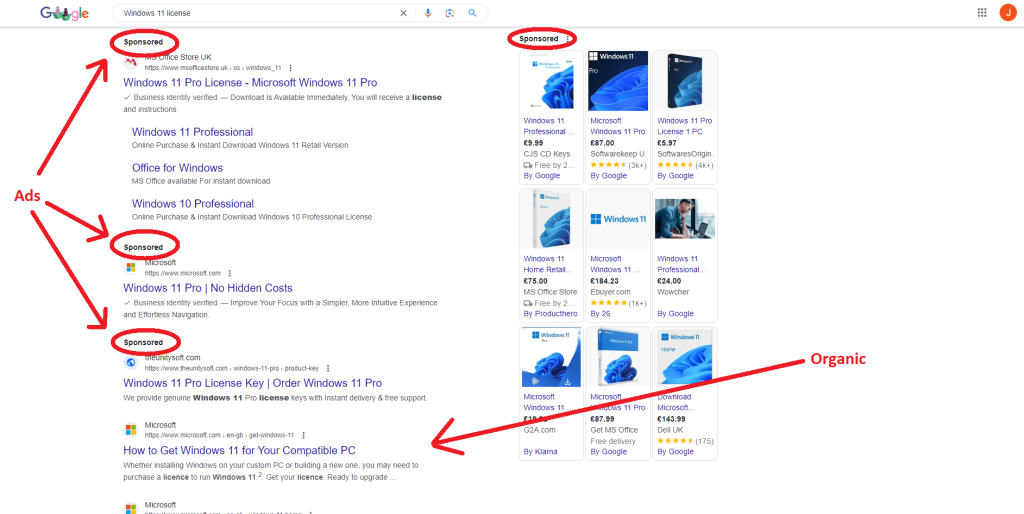
    There are many different types of PPC Ads, one of the most common types is the paid search Ad. This type of Ad appears when a user googles a search term that an advertiser is “bidding” on. These Ads appear in the SERP’s (Search Engine Results Page) alongside organic results. You can spot these Advertisements by looking for the “Sponsored” or “Ad” tag. These paid search Ads usually appear at the top and bottom of the Search engine results pages.

    Almost any search can trigger Pay-Per-Click Ads, for example someone may search for “Windows 11 License”, Alongside the organic results you may see Software or resale websites that have bid to have their Ad show with the intention of driving more sales or traffic to their website. When a user clicks one of these Ad links, the vendor is charged for each user that clicks through to the website.

    A Google Search Engine Results Page for the search term "Windows 11 license" with arrows pointing out the Paid Ad and Organic results

    Some other types of PPC Ads include Display Advertising, which typically serve banner ads, and Remarketing.

    How does PPC work?

    Pay-per-Click Advertising operates on a bidding system. Advertisers cannot simply pay more to ensure their ads appear more prominently than their competitors. Ads are instead subject to an “Ad Auction”, this is a completely automated process that google and other major search engines use to determine the relevance and validity of an advertisement to a user’s search query and the respective SERP.

    Need help with PPC? Or want to start a new Ad Campaign? Click here!

    How do keywords work in Pay-Per-Click Advertising?

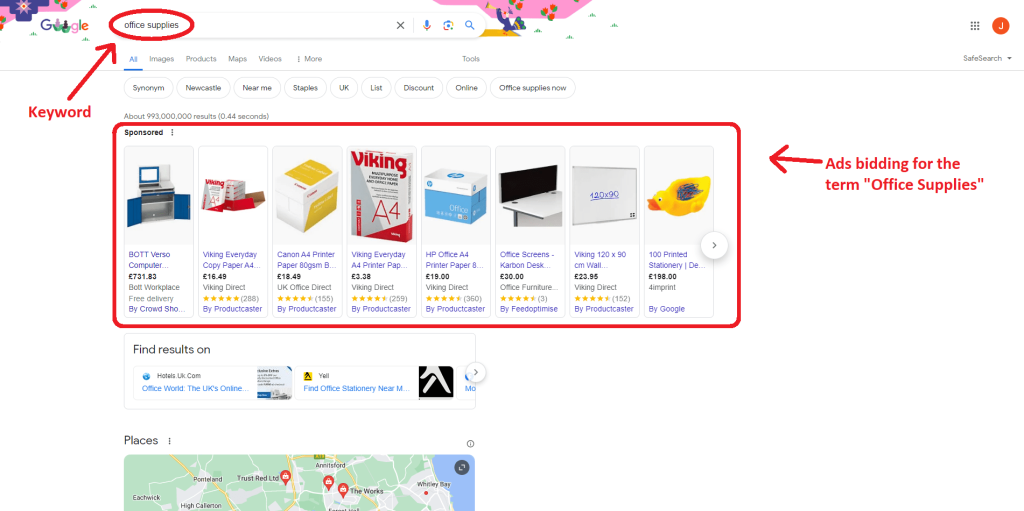
    As mentioned in the above section, an Ad Action is a bidding system. Advertisers must decide which terms they would like their ads to display for when a user makes a search. These terms are known as Keywords. Say, for example, that your business specializes in Office Supplies. A user looking to buy Printer Paper or Ink may enter the keyword “Office Supplies” into a search engine to find retailers offering these products.

    A Search Engine Results page highlighting the PPC results for the search term "office supplies".

    The moment a user submits a search query, the search engine performs a series of complex algorithmic calculations that the Ad Auction is based on. This determines which ads are displayed, in what order and by which advertiser.

    Since you pay for every click your ad receives, its important to only bit on keywords that are relevant to your products or services. Bidding on irrelevant keywords would produce a poor return on investment (ROI) for your Ad Campaign. Specialized keyword research allows you to bid on terms that are more likely to have a high ROI and produce a successful campaign for your business.

    Ready to take your visibility to the next level with Pay-Per-Click?

    Pay-Per-Click Advertising is an extremely powerful tool that can produce exceptional return on investment for businesses. PPC can be applied to almost any sector and can help provide instant results when compared to Organic search techniques.

    Here at Social+ our Paid Search Experts are here to help your business with its new or existing Ad Campaigns. With our dedicated Keyword research, Ad Copy creation, and Ad Optimization, we can help kickstart your paid search journey.

    Click here to find out more! Additionally, why not take a look at our socials to see what we’re about –  Facebook, Instagram, and LinkedIn.
  • Mastering Paid Search Budgeting: Strategies for Optimal ROI

    Mastering Paid Search Budgeting: Strategies for Optimal ROI

    In the dynamic landscape of digital marketing, mastering paid search budgeting is essential for businesses aiming to maximise their return on investment (ROI). Allocating resources effectively to drive targeted traffic and conversions requires a well-thought-out strategy. In this blog, we will delve into key paid search budgeting strategies to help you make the most of your advertising dollars.

    Understanding the Importance of Paid Search Budgeting

    Paid search, often referred to as pay-per-click (PPC) advertising, is a powerful tool for reaching potential customers online. As users actively search for products or services, paid search ads provide businesses with the opportunity to capture their attention. However, to make the most of this potential, a strategic budgeting approach is crucial.

    Set Clear Objectives

    Before diving into paid search budgeting, it’s essential to establish clear objectives. Whether your goal is to increase website traffic, boost sales, or enhance brand visibility, having a well-defined objective will guide your budget allocation.

    Determine Your Budget

    Once your objectives are in place, it’s time to establish a budget that aligns with your business goals. Consider factors such as industry competition, target audience size, and the average cost-per-click (CPC) in your niche. Allocating a realistic budget ensures that you have the financial resources to sustain your paid search efforts over time.

    Crafting a Targeted Paid Search Budgeting Plan

    Conduct Keyword Research

    Efficient paid search budgeting relies heavily on understanding your target audience’s search behaviour. Conduct comprehensive keyword research to identify relevant terms and phrases that potential customers are likely to use.

    Prioritise High-Performing Keywords

    Not all keywords are created equal. Some may drive more traffic but have lower conversion rates, while others may yield better results. Regularly analyse the performance of your keywords and allocate a larger portion of your budget to those that consistently deliver valuable leads and conversions. This targeted approach ensures that your budget is directed towards the most impactful areas.

    Optimising Ad Copy for Maximum Impact

    Create Compelling Ad Copy

    Crafting compelling ad copy is crucial for attracting clicks and driving conversions. Incorporate your main keyword, into your ad headlines and descriptions to enhance relevance and improve ad quality. A well-crafted ad not only grabs attention but also aligns with users’ search intent, increasing the likelihood of engagement.

    Utilise Ad Extensions

    Ad extensions provide additional information to users and can improve the visibility and performance of your ads. Include site link extensions, callout extensions, and structured snippets to make your ad more informative and appealing. This strategy can lead to higher click-through rates (CTRs) and, ultimately, a better return on your paid search investment.

    Conclusion

    Effective paid search budgeting is a continuous process of analysis, optimisation, and adaptation. By setting clear objectives, conducting thorough keyword research, and prioritising high-performing keywords, you can create a targeted budgeting plan that aligns with your business goals. Additionally, crafting compelling ad copy and utilising ad extensions enhances the overall effectiveness of your paid search campaigns.

    As you navigate the ever-evolving landscape of digital advertising, remember that paid search budgeting is not a one-size-fits-all approach. Regularly evaluate your performance metrics, adjust your budget allocation accordingly, and stay informed about industry trends to ensure your strategy remains effective. With a strategic and data-driven approach, mastering paid search budgeting can lead to sustainable growth and a positive impact on your bottom line.

    Want to leave your paid search to the professionals?

    Mastering the art of PPC and Paid search marketing is not an easy task and the field is constantly developing.

    Here at Social+, our dedicated team is here to help with all things Paid Search Marketing. We ensure that your Ad Quality not only meets but surpasses the ever-changing standards set by search engines. Our dedicated ads team are on hand to produce outstanding ad copy for your campaigns.

    Visit our website to explore our SEO  and PPC Services further. Additionally, why not take a look at our socials to see what we’re about –  Facebook, Instagram, and LinkedIn.
  • Beyond Likes: Digital Marketing Metrics That Truly Matter

    Beyond Likes: Digital Marketing Metrics That Truly Matter

    In the ever-evolving realm of digital marketing, the pursuit of success extends far beyond the basic accumulation of likes and follows. While these metrics offer a visible sign of approval, astute marketers recognise the imperative to delve deeper into a comprehensive array of digital marketing metrics that authentically reflect the effectiveness of their online endeavours. In this blog, we will delve into the metrics that transcend surface-level popularity, providing a nuanced understanding of digital marketing success.

    Reach and Impressions in Digital Marketing

    Likes and follows alone may not capture the complete extent of your online audience. Reach and impressions shed light on how many users have seen your content, offering a broader perspective on the potential impact of your digital marketing campaigns. A high reach indicates a wider audience, which is particularly valuable for brand awareness and exposure in the digital landscape.

    Engagement Rate: Quantifying Active Participation

    While likes and follows are forms of engagement, the engagement rate encompasses a broader spectrum, including comments, shares, and clicks. This metric quantifies the level of interaction your content generates, providing insights into the depth of your audience’s connection with your brand. A high engagement rate suggests that your content resonates with your audience, fostering a sense of community.

    Click-Through Rate (CTR): Beyond the Digital Feed

    Clicks matter – especially if they lead to your website or a specific call-to-action. The click-through rate measures the percentage of users who click on your content compared to the total who viewed it. A higher CTR signifies that your audience is not just passive observers but active participants, taking the next step in their engagement with your brand.

    Conversion Metrics in Digital Marketing

    Digital marketing should contribute to your business goals. Metrics such as conversion rate, lead generation, and sales attributed to online channels provide tangible evidence of your campaigns’ impact. By aligning digital marketing efforts with measurable outcomes, you can demonstrate a clear return on investment (ROI) and justify your marketing spend.

    Sentiment Analysis: Unveiling Audience Sentiments

    Beyond quantitative metrics, sentiment analysis delves into the qualitative realm. Monitoring comments, mentions, and direct messages helps gauge how your audience feels about your brand. Positive sentiment reflects a strong brand connection, while negative sentiment may indicate areas for improvement. Understanding these sentiments empowers you to tailor your strategy accordingly.

    Customer Lifetime Value (CLV): Cultivating Long-Term Relationships

    Digital marketing is not just about immediate gains; it’s about fostering long-term relationships. Customer lifetime value measures the total value a customer brings to your business over time. By nurturing relationships and creating brand advocates through online channels, you contribute to increasing CLV and building a loyal customer base.

    Conclusion:

    In the world of digital marketing, the pursuit of metrics goes far beyond the surface-level popularity of likes. Understanding and prioritising metrics such as reach, engagement rate, click-through rate, conversion metrics, sentiment analysis, and customer lifetime value provide a holistic view of your online performance. By delving into these metrics, marketers can not only measure the immediate impact of their efforts but also build a foundation for sustainable, long-term success in the ever-evolving digital landscape. Remember, it’s not just about being liked; it’s about making meaningful connections and driving real results for your business.

    Want to leave your Digital Marketing to the professionals and take your online presence to the next level?

    With the right blend of creativity, data-driven insights, and strategic planning, your business can unlock a world of opportunities and chart a successful path in the digital age. This is where we come in.

    Staying up-to-date with the latest trends and adapting your strategies to appeal directly to your audience is key to staying ahead in the digital landscape. Here at social+, we are constantly evolving our strategies based on customer behaviour, the latest trends and regular algorithm updates.

    Learn more about our digital marketing services or request a Free digital marketing audit.

    Additionally, why not take a look at our socials to see what we’re about – Facebook, Instagram, and LinkedIn.
  • PPC vs. SEO: Finding the Right Balance for Your Digital Marketing Strategy

    PPC vs. SEO: Finding the Right Balance for Your Digital Marketing Strategy

    In the dynamic realm of digital marketing, businesses face a critical decision when it comes to allocating resources between PPC (Pay-Per-Click) and SEO (Search Engine Optimisation). Striking a harmonious balance between these two strategies is imperative for a comprehensive and effective digital marketing approach.

    Understanding the Dynamics of PPC vs. SEO:

    PPC and SEO represent two distinct approaches to online visibility, each with its unique strengths and considerations. PPC involves paid advertising, where businesses bid on keywords to secure priority placements in search engine results. Conversely, SEO centres around optimising a website’s content and structure to achieve organic visibility in search results.

    The Swift Impact of PPC:

    Pay-Per-Click advertising offers businesses immediate visibility on search engine results pages (SERPs). By bidding on relevant keywords, your ad can appear with priority, ensuring exposure to potential customers. This rapid visibility is particularly advantageous for time-sensitive promotions or new product launches, giving businesses an edge in capturing immediate attention.

    The Long-Term Growth Potential of SEO:

    In contrast, SEO is a long-term investment that contributes to sustained organic growth. By optimising your website for search engines, you create a foundation for consistent, free traffic over time. High-quality content, strategic keyword placement, and effective link-building are the cornerstones of a successful SEO strategy that builds credibility and authority in the eyes of search engines.

    Balancing Act: Considering Immediate Impact and Long-Term Investment:

    One of the primary considerations in the PPC vs. SEO debate is the balance between immediate impact and long-term investment. PPC delivers quick results but comes with a cost for each click on your ad. The cost of SEO is more distributed over time, focusing on content creation, link-building, and ongoing website optimisation. Achieving the right equilibrium in your budget allocation is essential for maximising overall return on investment (ROI). However, this balance can change significantly on a business-by-business basis.

    Strategic Keyword Integration:

    Effective keyword research is pivotal when navigating the PPC vs. SEO landscape. Integrating relevant keywords strategically into both your PPC campaigns and website content ensures a cohesive and effective digital marketing strategy. Identify high-performing keywords for your PPC ads while incorporating them seamlessly into your website’s content to strengthen its organic search performance.

    Cost Considerations in PPC vs. SEO:

    Beyond the immediate vs. long-term dynamic, the cost structure of PPC and SEO also influences decision-making. PPC involves a direct monetary investment for each click, making it a more immediate but potentially costly strategy. On the other hand, the cost of SEO is spread over various activities, including content creation and optimisation, making it a more sustainable and scalable approach.

    Conclusion: Striking the Right Balance for Optimal Results

    In the ongoing debate of PPC vs. SEO, finding the right balance is pivotal for a successful digital marketing strategy. PPC offers immediate visibility and targeted advertising, while SEO provides a foundation for sustained organic growth. By integrating these two approaches strategically, businesses can leverage the unique strengths of both and create a well-rounded strategy that maximises their online presence and ROI. The key is not to view PPC and SEO as mutually exclusive but rather as complementary elements, each contributing to a holistic and effective digital marketing strategy tailored to your business goals and resources.

    Want some help with your inbound marketing?

    Mastering the art of SEO and PPC is not an easy task.

    Here at Social+, our dedicated team is here to help with all things SEO and PPC. We ensure that your website not only meets but surpasses the ever-changing standards set by search engines. Our dedicated ads team are on hand to produce outstanding ad copy for your campaigns.

    Visit our website to explore our SEO  and PPC Services further. Additionally, why not take a look at our socials to see what we’re about –  Facebook, Instagram, and LinkedIn.
  • Optimising for Success: The Essential Role of SEO Services in the Digital Age

    Optimising for Success: The Essential Role of SEO Services in the Digital Age

    In the fast-paced and ever-evolving digital landscape, the role of SEO services has become paramount for businesses striving to establish a robust online presence. As the internet continues to be the go-to source for information, products, and services, the ability to effectively harness the power of search engines has become a make-or-break factor for success. In this blog post, we will explore the pivotal role of SEO services in navigating the complexities of the digital age and achieving online prominence.

    Understanding the Basics: What is the Role of SEO Services?

    The term “SEO” stands for Search Engine Optimisation, a multifaceted approach aimed at enhancing a website’s visibility on search engines like Google, Bing, and Yahoo. The ultimate goal is to improve a website’s organic (non-paid) search engine rankings. These improved rankings make it more likely to be found by users actively searching for relevant information, products, or services.

    Enhancing Visibility and Driving Traffic

    One of the primary roles of SEO services is to optimise a website’s structure, content, and other elements to align with search engine algorithms. By strategically incorporating relevant keywords, creating high-quality content, and ensuring a seamless user experience, SEO services work to enhance a website’s visibility on search engine results pages (SERPs). This increased visibility translates into more organic traffic. SEO Services help provide businesses with a steady stream of potential customers who are actively seeking what they have to offer.

    Building Credibility and Trust

    In the digital age, credibility is a currency that can significantly impact a business’s success. SEO services play a crucial role in establishing and building this credibility. When a website consistently appears at the top of search results, users are more likely to trust it as a reliable source of information or a reputable provider of products and services. Through the implementation of ethical SEO practices, businesses can foster trust with both search engines and their target audience.

    Adapting to Algorithm Changes

    Search engines continually refine their algorithms to deliver the most relevant and high-quality results to users. Keeping up with these changes is a fundamental aspect of SEO services. The role of SEO professionals is not only to optimise for current algorithms but also to anticipate and adapt to future changes. This adaptability ensures that a website remains in good standing with search engines and maintains its visibility over the long term.

    Improving User Experience

    User experience is a critical factor in SEO success. Search engines prioritise websites that offer a positive and seamless experience for visitors. SEO services focus on optimising website speed, mobile responsiveness, and overall usability. By creating a user-friendly environment, businesses not only please search engines but also enhance the overall satisfaction of their audience, leading to higher engagement and conversion rates.

    Measuring and Analysing Performance

    SEO services go beyond implementation; they also involve continuous monitoring and analysis. Professionals use tools and analytics to measure the performance of SEO strategies, identifying what works and what needs improvement. By analysing data such as website traffic, keyword rankings, and user behaviour, businesses can refine their SEO approach. Making these constant updates helps ensure a more effective and targeted online presence.

    Conclusion

    In the digital age, the role of SEO services cannot be overstated. From enhancing visibility and driving organic traffic to building credibility and adapting to algorithm changes. SEO is the linchpin that connects businesses with their online audience. As businesses continue to navigate the dynamic landscape of the internet, investing in effective SEO services remains essential for optimising success and securing a competitive edge in the digital realm.

    Need a little help with your SEO?

    Mastering the art of SEO is a journey, not a destination.

    As Google continues to refine its ranking factors, staying informed and implementing best practices will be the key to sustained online visibility and success in the competitive digital landscape.

    Here at Social+, our dedicated team is here to help with all things SEO. We ensure that your website not only meets but surpasses the ever-changing standards set by search engines.

    Enhance your online presence, ascend the search engine rankings, and establish authority in your industry with Social+ as your partner.

    Visit our website to explore our SEO services further. Additionally, why not take a look at our socials to see what we’re about –  Facebook, Instagram, and LinkedIn.
  • Tailoring Your Message: The Art of Targeted Social Media Content

    Tailoring Your Message: The Art of Targeted Social Media Content

    In the fast-paced world of digital marketing, the ability to connect with your audience on a personal level is more crucial than ever. As businesses navigate the dynamic landscape of online commerce, one key strategy stands out for its impact on sales: the art of targeted social media content. In this blog post, we’ll explore the significance of targeted social media content in the realm of digital marketing and its undeniable influence on driving sales.

    Understanding Targeted Social Media Content

    Targeted social media content is more than just a buzzword; it’s a strategic approach to crafting messages tailored specifically to a defined audience. Unlike generic content that attempts to appeal to a broad spectrum, targeted content hones in on the preferences, behaviours, and demographics of a particular audience segment. This approach allows businesses to speak directly to the needs and interests of their ideal customers.

    Building Meaningful Connections

    One of the primary advantages of targeted social media content is its ability to foster genuine connections with your audience. By understanding your audience’s pain points, desires, and behaviours, you can create content that resonates on a deeper level. This connection, in turn, builds trust and loyalty, transforming casual followers into engaged customers.

    Enhancing Engagement and Interaction

    Targeted social media content encourages active engagement. When users find content that directly speaks to their interests or needs, they are more likely to like, share, comment, and click through. This heightened level of interaction not only boosts your brand’s visibility but also increases the likelihood of converting leads into actual sales.

    Driving Traffic to Your Website with Targeted social media content

    A well-thought-out social media content strategy can significantly impact website traffic. By strategically placing calls-to-action within your targeted content, you guide users to explore your website further. This increased traffic provides more opportunities for conversions and sales.

    Optimising Return on Investment (ROI)

    In the realm of digital marketing, return on investment is a critical metric. Targeted social media content allows businesses to allocate resources more effectively by focusing on the channels and messages that resonate most with their audience. This optimisation ensures that marketing efforts generate a higher return on investment, both in terms of time and money.

    Navigating the Algorithms: Quality Over Quantity

    In the era of algorithm-driven social media platforms, the quality of your content matters more than ever. Simply bombarding your audience with frequent posts won’t cut it. Search engines and social media algorithms prioritise content that is relevant, engaging, and valuable to users. Hence, the emphasis should be on creating fewer but high-quality, targeted social media posts that genuinely captivate your audience.

    Strategies for Crafting Targeted Social Media Content

    Audience Segmentation: Divide your audience into segments based on demographics, interests, or behaviours. Craft content that specifically addresses the unique needs and preferences of each segment.

    Personalised Messaging: Use personalisation techniques to address your audience directly. Mention their pain points, preferences, or aspirations to create a sense of connection.

    Visual Appeal: Incorporate visually appealing elements into your content. High-quality images, infographics, and videos can capture attention and convey your message more effectively.

    Analytical Insights: Leverage analytics to understand what types of content perform best with your audience. Analyse metrics such as engagement rates, click-through rates, and conversions to refine your strategy over time.

    Conclusion

    In the dynamic landscape of digital marketing, the importance of targeted social media content cannot be overstated. This artful approach enables businesses to forge meaningful connections, enhance engagement, drive website traffic, and optimise ROI. By tailoring your message to the specific needs and interests of your audience, you not only stand out in the crowded digital space but also lay the foundation for increased sales and long-term customer relationships. Embrace the art of targeted social media content, and watch as your digital marketing efforts translate into tangible business success.

    Want to leave your Digital Marketing to the professionals and take your online presence to the next level?

    With the right blend of creativity, data-driven insights, and strategic planning, your business can unlock a world of opportunities and chart a successful path in the digital age. This is where we come in.

    Staying up-to-date with the latest trends and adapting your strategies to appeal directly to your audience is key to staying ahead in the digital landscape. Here at social+, we are constantly evolving our strategies based on customer behaviour, the latest trends and regular algorithm updates.

    Learn more about our digital marketing services or request a Free digital marketing audit.

    Additionally, why not take a look at our socials to see what we’re about – Facebook, Instagram, and LinkedIn.
  • Budgeting for PPC Success: A Guide to Mastering PPC

    Budgeting for PPC Success: A Guide to Mastering PPC

    Pay-Per-Click (PPC) campaigns remain a potent tool for businesses to reach their target audience.

     However, to truly harness the power of PPC, strategic budgeting is paramount.

    In this comprehensive guide, we’ll delve into the key aspects of budgeting for PPC success, ensuring that every spend contributes to achieving your marketing goals.

    Understanding the Significance of Budgeting in PPC

    Budgeting for PPC success is not just about allocating funds; it’s a meticulous process that demands a clear understanding of your business goals, target audience, and the dynamics of the advertising platforms.

     Your PPC budget is essentially the financial backbone of your campaign, determining the scope, reach, and effectiveness of your advertisements.

    Setting Realistic PPC Goals

    Before delving into budget allocation, it’s crucial to establish realistic PPC goals.

    Whether it’s increasing website traffic, boosting conversions, or enhancing brand awareness, clearly defined objectives will guide your budgeting decisions.

    Take the time to align your PPC goals with broader marketing strategies to ensure a cohesive and integrated approach.

    Keyword Research: The Foundation of Budgeting

    Keywords are the building blocks of any successful PPC campaign. As you embark on budgeting for PPC success, meticulous keyword research becomes imperative.

    Identify high-performing keywords relevant to your business and audience. These keywords should not only drive traffic but also lead to valuable actions, such as clicks and conversions.

    Allocate Budgets Based on Keyword Performance

    Segment your PPC budget based on the performance of different keywords. Allocate more budget to high-performing keywords that consistently deliver results.

    Regularly monitor and adjust your budget allocation to maximise returns on investment.

    Quality Score Optimisation and Budget Efficiency

    Google’s Quality Score is a crucial factor influencing the cost and effectiveness of your PPC campaigns. It considers the relevance of your ad, the quality of your landing page, and the historical performance of your account.

    A higher Quality Score often leads to lower costs per click (CPC) and better ad placements. By optimising your Quality Score, you enhance the efficiency of your budget, ensuring that each click is a step closer to conversion.

    Prioritise Quality Score Improvement

    Dedicate a portion of your budget to activities that enhance your Quality Score, such as refining ad copy, optimising landing pages, and ensuring relevance between keywords and ad content.

    Ad Scheduling and Geo-Targeting

    Efficient budgeting involves reaching your audience at the right time and in the right location. Utilise ad scheduling to display your ads during peak hours when your target audience is most active.

    Geo-targeting allows you to tailor your ads to specific locations, ensuring your budget is optimised for maximum impact in key markets.

    Refine Strategies with Ad Scheduling and Geo-Targeting

    Regularly analyse performance data to identify optimal times and locations for ad visibility. Adjust your budget allocation to prioritise periods and regions that yield the best results.

    Testing and Iteration: A Continuous Process

    Budgeting for PPC success is not a one-time task but a continuous process of testing and iteration.

    Implement A/B testing for ad variations, landing pages, and different audience segments. Use the insights gained to refine your budgeting strategy and enhance campaign performance over time.

    Allocate Budget for Ongoing Testing

    Set aside a portion of your budget for ongoing testing initiatives. This could include testing new ad creatives, experimenting with ad copy, or exploring additional keywords to expand your reach.

    Mastering PPC Through Strategic Budgeting

    By aligning your budget with your goals, optimising for quality, and embracing continuous testing, you’ll not only master PPC but also propel your business towards sustained success in the digital landscape.

    Incorporate these budgeting strategies, monitor performance metrics diligently, and watch as your PPC campaigns achieve new heights of success.

    Remember, effective budgeting is not just about spending money; it’s about investing wisely to maximise returns and drive meaningful outcomes for your business.

    Need a little help budgeting for PPC success?

    Employing PPC presents a powerful avenue to connect with potential customers actively seeking products and services similar to yours.

    This strategic approach not only enhances visibility but significantly boosts your likelihood of converting leads into successful sales.

    Learn more about our PPC services.

    Additionally, why not take a look at our socials to see what we’re about –  Facebook, Instagram, and LinkedIn.